

The Reserve Bank of Australia (RBA) has made just one interest rate cut as of 2025 by 0.25 percentage points, bringing interest rates down from 4.35% to 4.10%.
This is the first rate cut since 2020, which means you can expect the market to become very much saturated with lots of real estate buyers who will waste no time in taking advantage of cheaper loans.
What’s the catch?
The catch is that smart investors must hurry in their purchase of industrial property as this is a very short window. Let’s explain why.
Cheaper loans due to RBA rate cuts have three major effects in the market:
First, investors can borrow larger sums and it gives them greater buying power. With low interests, smarts investors have lesser financial burden and more appetite for bigger share of lands. This is called the “sweet spot” for land investors who must invest as quick as possible before landowners increase their property price.
And that brings us to the second major effect.
As more buyers are available in the market, the market quickly becomes very competitive. Land owners take advantage of this and bargain for higher prices.
This makes the window of advantage very short for investors who want to make the purchase before land owners can list their properties at higher value.
The game here is for the long shot. If you can quickly jump from “team buyer” to team “land owner”, then you have a sure shot at long term gains. As property prices will soon increase after this short window, it gives smart investors an opportunity to become land owners so they can list their newly purchased properties at higher prices for the long run.
Thirdly, rate of return on government bonds decreases, and this makes property investment a far superior option to investors, making the property market even more competitive.
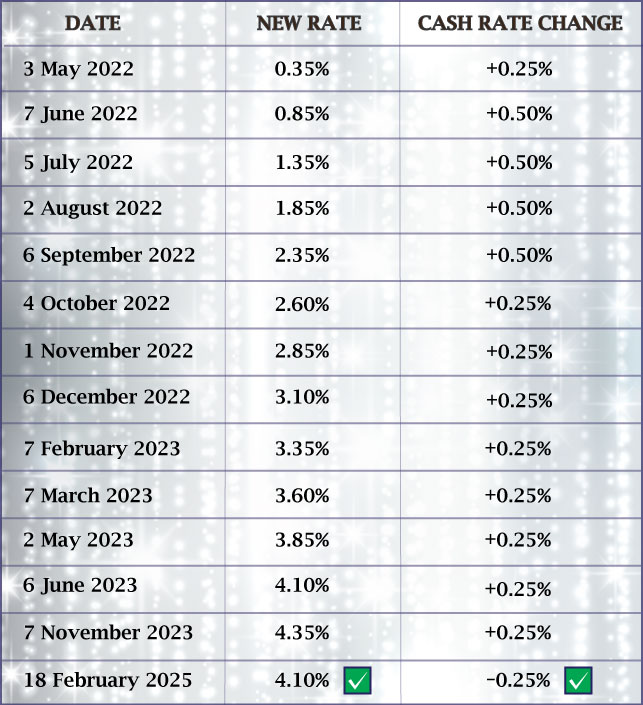
Table 1: RBA rate changes (2020 – 2025). Source: Reserve Bank Australia.
Do all property values increase at the same rate? Which ones are most profitable?
Industrial, commercial and retail properties are the darling of Australia’s real estate market. In comparison, office spaces struggle due the ever growing hybrid model of work, plus the emergence of data centres and AI-based work has made office spaces slightly redundant. However, offices with superior ESG (environmental, social and governance) might still stand out to prospective buyers.
Limited supply of prime land in Australia is one of the major reasons for the consistently high value of industrial lands. For example, in Melbourne, currently only about four years’ worth of zoned industrial land is available for future developments.
The long term return of investments for industrial lans remain higher mainly for it’s usability in logistics, storage and supply chain upscaling. E-commerce, closely tied with logistics underwent major boost, while more traditional sectors like agribusiness driven growth opening up new investment portals.